
Key Takeaways
- Precision in both design and execution is paramount for the structural integrity of large-scale projects.
- The choice of construction materials has a significant impact on a structure’s longevity, resilience, and performance in specific environments.
- Advanced fabrication methods, such as robotic welding and CNC machining, result in greater accuracy and cost efficiency.
- Continuous quality control checks minimize risks and ensure compliance with all required regulations.
- Stringent safety standards protect workers during fabrication and safeguard building occupants for years to come.
The construction of large structures—bridges, skyscrapers, and industrial facilities—relies on meticulous fabrication of components. This complex process requires attention to detail and adherence to fundamental principles to ensure durability, safety, and cost efficiency over the long term. For businesses and contractors seeking regional expertise, selecting trusted metal fabrication services Columbus, OH is a crucial early step for successful project outcomes. Working with a proven metal fabrication partner ensures reliable project timelines, deep expertise in complex fabrication scenarios, and experience in handling large and intricate assemblies.
Large-scale fabrication involves careful planning, advanced technology, and strict industry standards. Every project, like energy plants or stadiums, begins with a focus on quality in materials, engineering, and safety. Following best practices at each stage ensures structural integrity and safety for construction teams and future occupants. Ignoring these principles can cause structural failures, financial losses, and damage to reputation.
Precision in Design and Fabrication
Large-scale projects require minimal errors, as even small measurement discrepancies can pose significant safety risks. Energy facilities need welding tolerances under a millimeter to meet standards and avoid failures. Advanced 3D modeling and precise survey tools have transformed the industry, enabling engineers to uphold strict tolerances. Digital schematics guide blueprints into components, reducing costly corrections. Clear communication among teams ensures the project adheres to its original vision.
Material Selection
Selecting the right material for each structural element is crucial as it affects the structure’s future. Factors like load-bearing needs, corrosion resistance, and environmental stressors guide these decisions. Offshore oil platforms, for example, use high-strength alloys and coatings to resist saltwater, winds, and temperature changes. Urban high-rises may use steel or concrete composites that balance weight, strength, fire resistance, and seismic performance to meet regulations. Material selection involves testing and simulation to guarantee long-term performance.
Advanced Fabrication Techniques
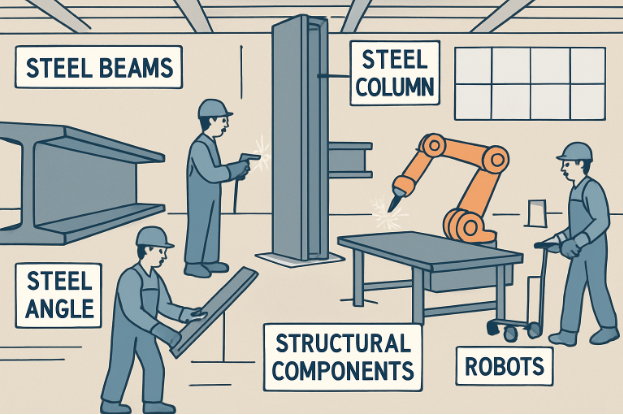
As digital tech advances, fabrication shops use robotics, laser cutting, and CNC tools to make complex parts with high accuracy and repeatability. Automated welding now produces stronger, consistent welds faster and safer than manual methods. Modular construction with prefabrication in controlled shops allows parallel production of structural elements, reducing weather delays and site bottlenecks. These technologies enhance precision, efficiency, safety, and help control project timelines and labor costs in large-scale projects.
Quality Control Measures
Quality assurance isn’t just a final check; it’s an ongoing process at every stage of fabrication and assembly. Regular inspections—using destructive and non-destructive tests like X-ray imaging, ultrasonic testing, load tests, and visual inspections—ensure each piece meets specifications and safety standards. Digital records improve traceability and root cause analysis. Adherence to standards like AISC and ISO guarantees the structure’s long-term safety, reliability, and performance.
Safety Standards
Modern structural fabrication poses significant onsite risks. Safe practices—such as safety protocols, training, PPE, machine safeguards, and environment reviews—are essential. Regular safety audits and toolbox talks promote consistent safety, while ongoing education on regulations like OSHA fosters accountability and trust. These steps help maintain high standards from start to finish, minimizing delays and liabilities.
Integration of Components
One of the biggest challenges in large-scale construction is integrating thousands of prefabricated parts—sometimes from different locations—into a single structure. Careful logistics planning ensures components arrive on site in the correct order, avoiding delays, out-of-sequence work, or storage issues. Digital twin modeling and project management platforms are increasingly used; digital twins help teams simulate assembly, forecast problems, and fix issues before construction. Regular meetings, mock-ups, and barcoded tracking also help reduce assembly errors.
Conclusion
The path to safe, durable, and successful large-scale construction relies on following proven principles from design to on-site assembly. Every decision—about precision, materials, technology, or safety—affects both the immediate outcome and the long-term legacy of these structures. By staying updated with new methods, enforcing high quality standards, and prioritizing safety, modern construction professionals lay the foundation for future architectural achievements and community landmarks, ensuring a positive impact for generations.